Shaurya Mehta
JourneyShippedHow I workNotes
Get in touch
JourneyShippedHow I workNotes

Shipped

AI agents running on real traffic, Open Banking APIs live at European banks, fixes merged into open source, and things I built to learn. Cards with a case study say so.

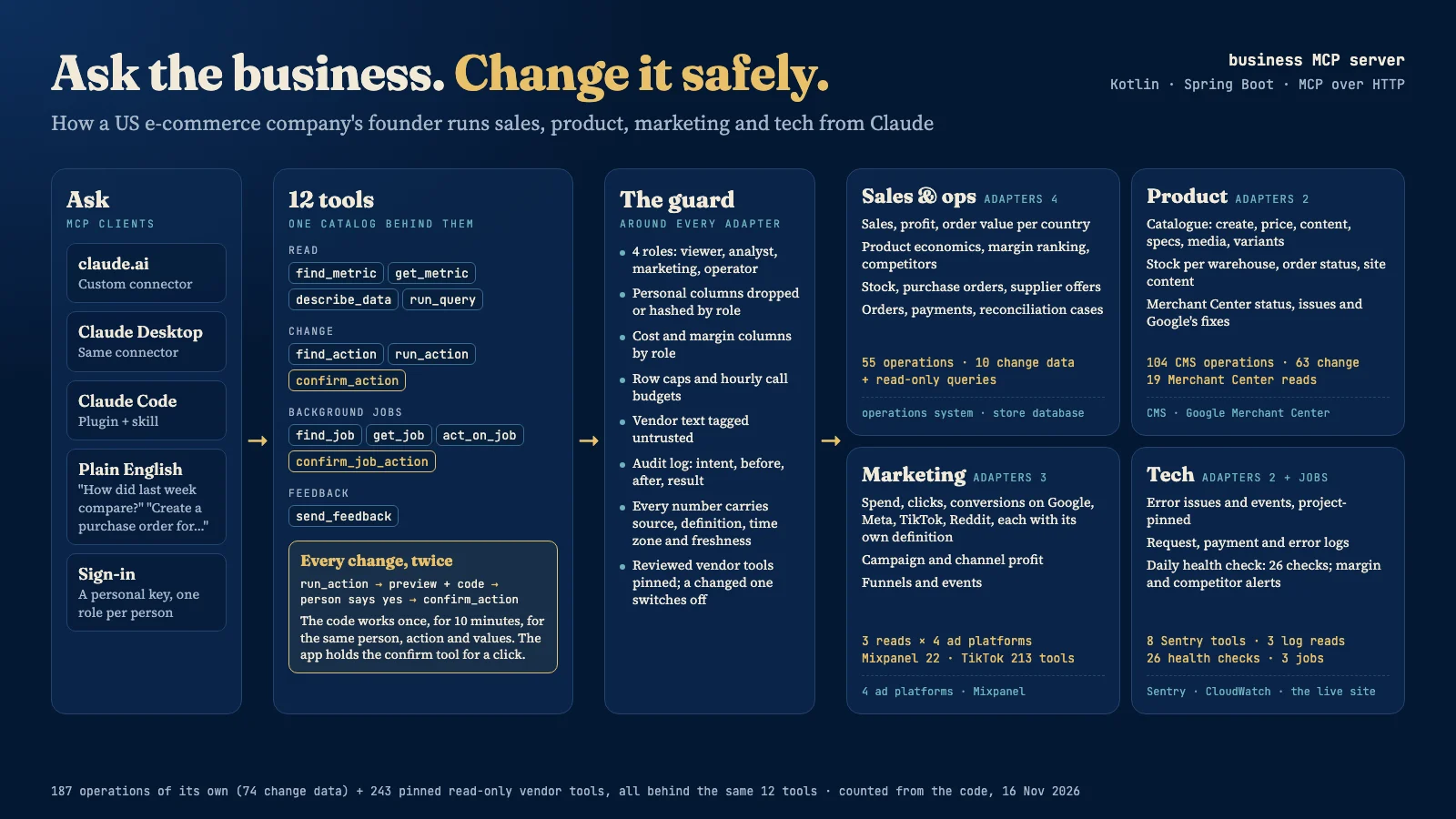
  • Architecture: Claude apps call 12 MCP tools; a guard applies roles, masking and the audit log; adapters grouped as sales and ops, product, marketing and tech reach the operations system, store database, CMS, Merchant Center, four ad platforms, Mixpanel, Sentry and CloudWatch

    At work

    A business MCP server: run the company from Claude

    An MCP server that lets a US e-commerce founder ask Claude about sales, margins, stock, ads and site health, and change products, prices and purchase orders in plain English. Every number names its source; every change waits for a preview and a yes.

    187 operations + 243 vendor tools behind 12 MCP tools · 57/57 end-to-end scenarios

    counted from the code and an end-to-end run across all four roles, Nov 2026

    Case study →
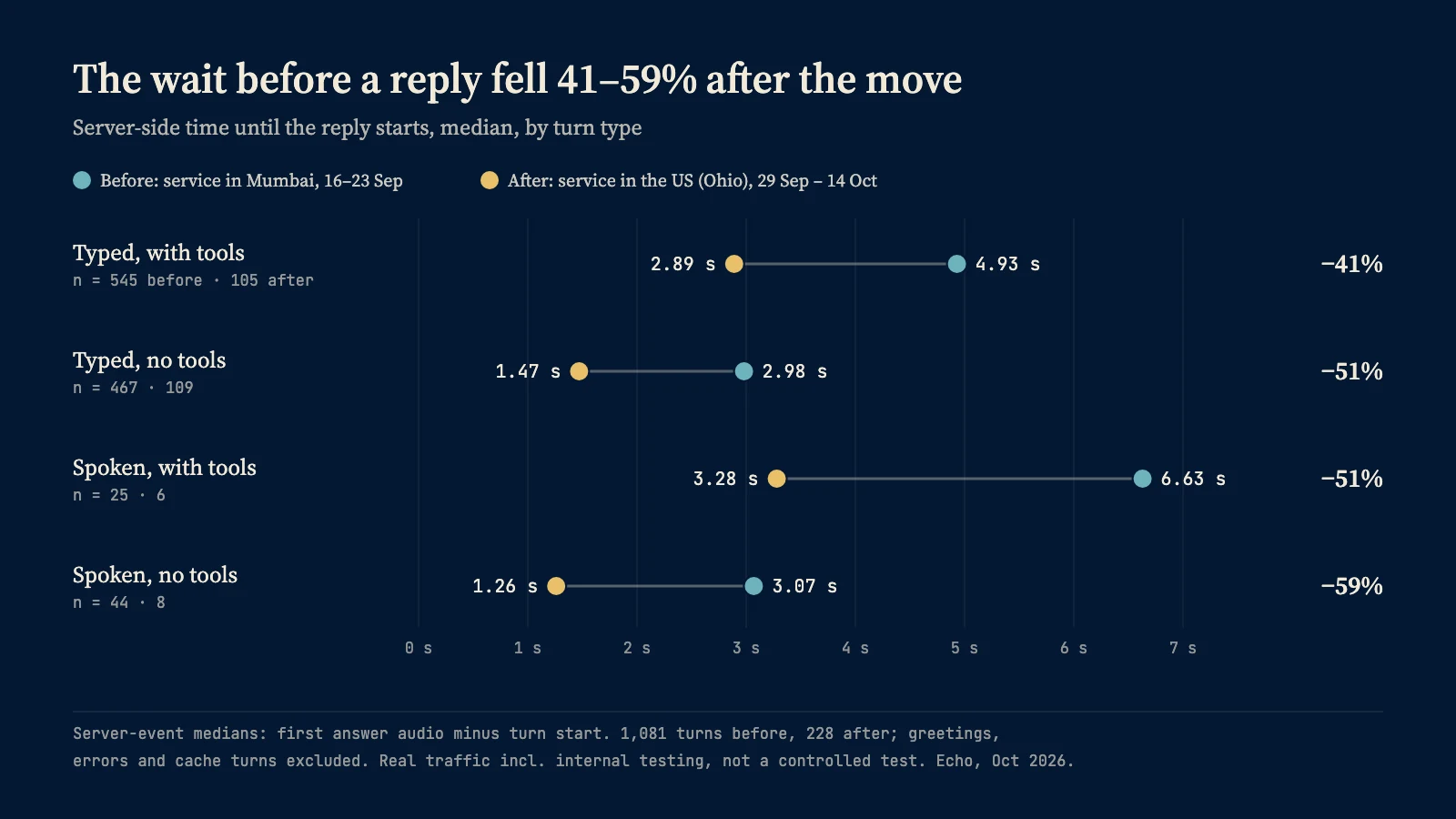
  • Chart: median server-side wait before the reply starts, by turn type, before and after the move. Typed with tools 4.93 s to 2.89 s; typed without tools 2.98 to 1.47 s; spoken with tools 6.63 to 3.28 s; spoken without tools 3.07 to 1.26 s.

    At work

    Echo: voice replies 41–59% faster

    Found why a voice agent was slow for US users, moved the service next to them, and added a shared tool cache.

    Reply start −41% to −59% by turn type · cache hits ~10 ms vs 69–130 ms

    server medians, 1,081 vs 228 turns, 16 Sep – 14 Oct 2026

    Case study →
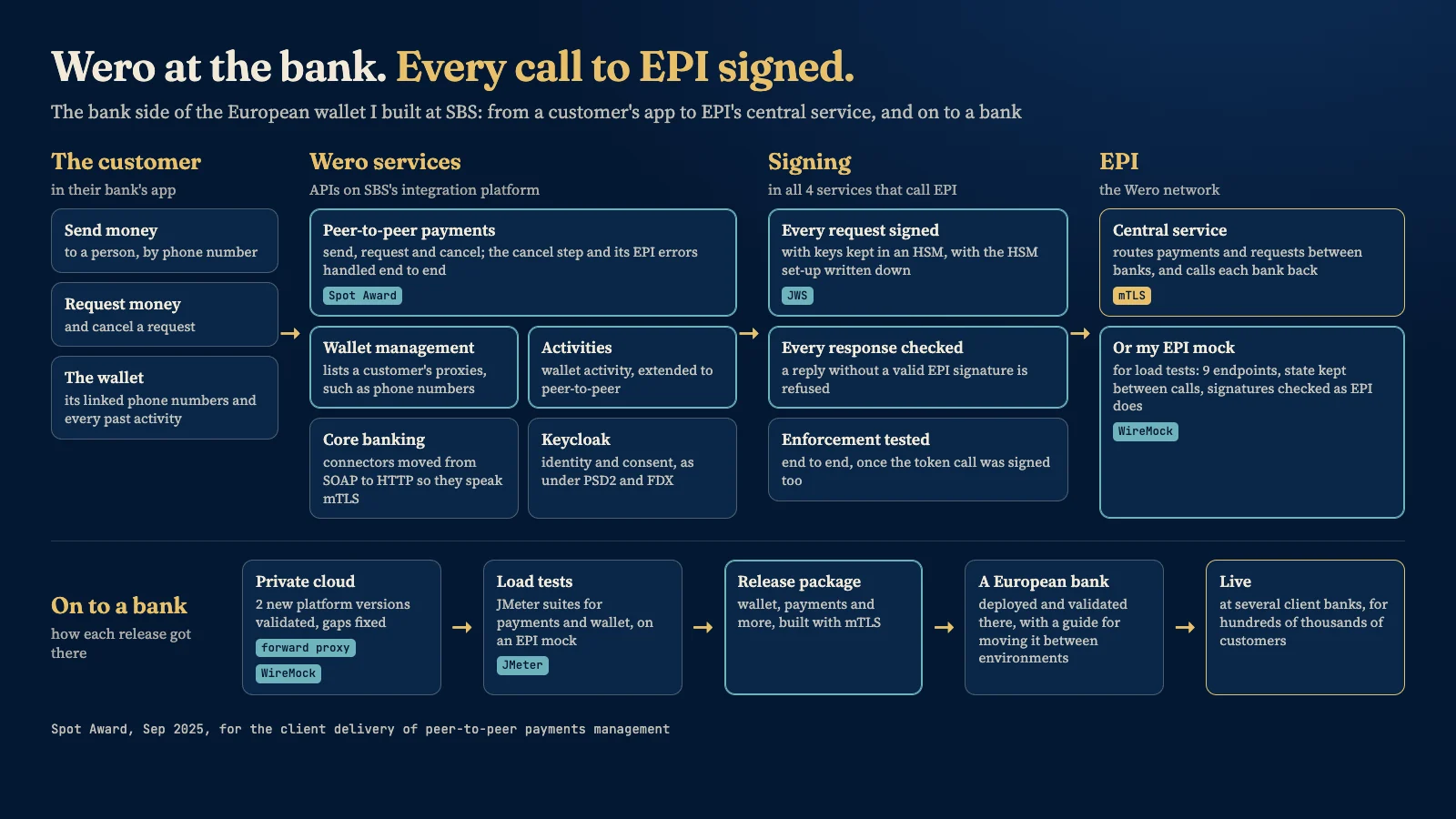
  • Wero at the bank: a customer's app calls the Wero services for peer-to-peer payments, wallet management and activities, with core banking over mTLS and Keycloak for identity; every request to EPI's central service is signed and every response checked, or the EPI mock answers for load tests. Below, each release goes from private cloud through load tests and an mTLS release package to a European bank, then live at several client banks

    At work

    Wero: the bank side of Europe's wallet, live at client banks

    The APIs a bank's app calls for Wero's peer-to-peer payments, wallet and activity, with every call to EPI's central service signed and every reply checked. Over my year at SBS I took it from a private cloud to a European bank, mTLS included.

    Live at several client banks · hundreds of thousands of customers

    Wero at SBS's client banks, 2026 · Spot Award, Sep 2025, for its peer-to-peer payments delivery

    Case study →
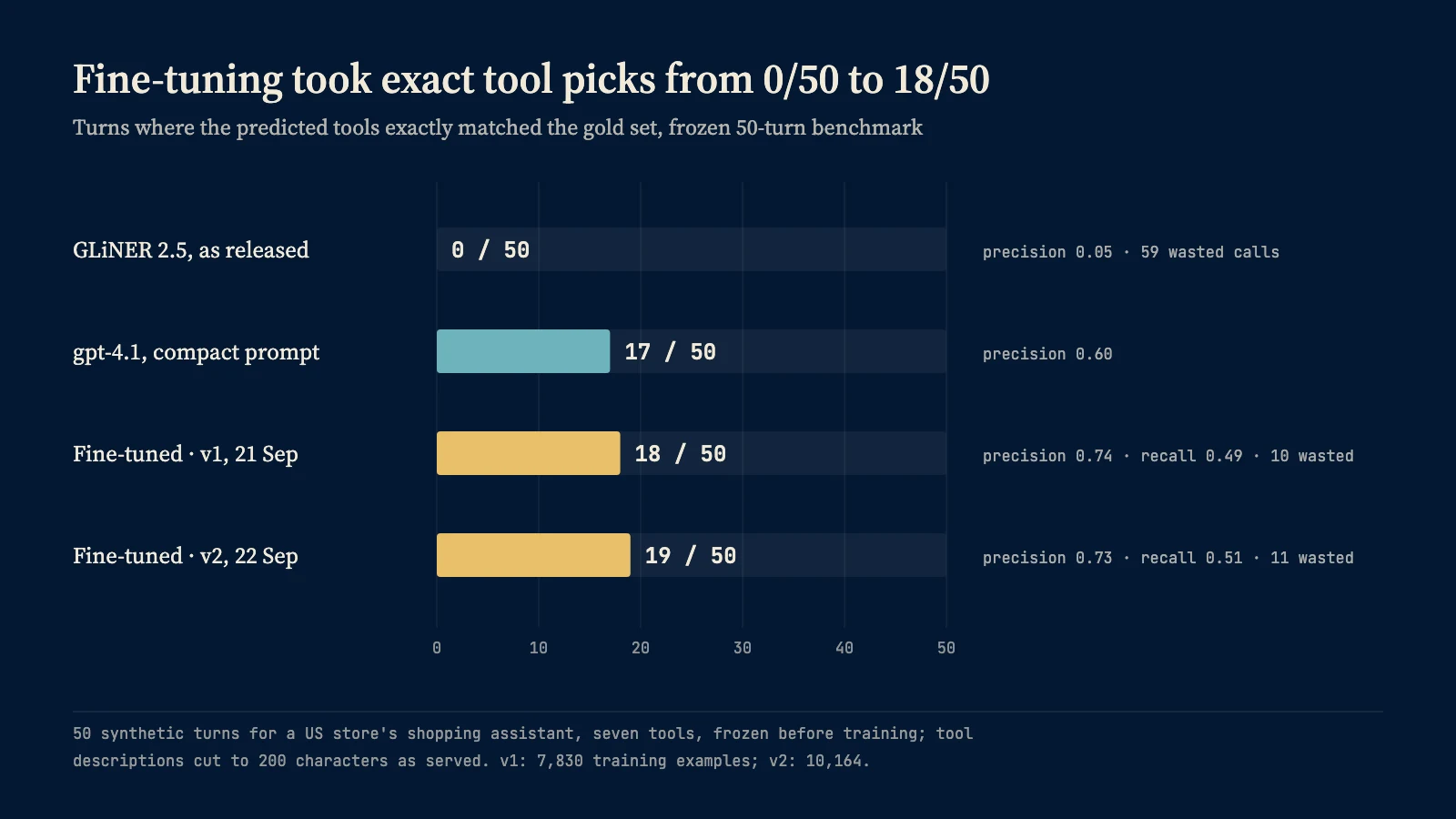
  • Chart: exact tool picks on a frozen 50-turn benchmark. GLiNER 2.5 as released 0 of 50; gpt-4.1 with a compact prompt 17; fine-tuned v1 18; fine-tuned v2 19.

    At work

    Echo: a 28 ms tool-call model

    Fine-tuned GLiNER 2.5 (194M parameters) to predict a voice agent's next tool call, served on a GPU.

    Exact tool picks 0/50 → 18/50 · 3 LLM tool calls instead of 9 in a replay

    fixed 50-case benchmark · one replayed conversation

    Case study →
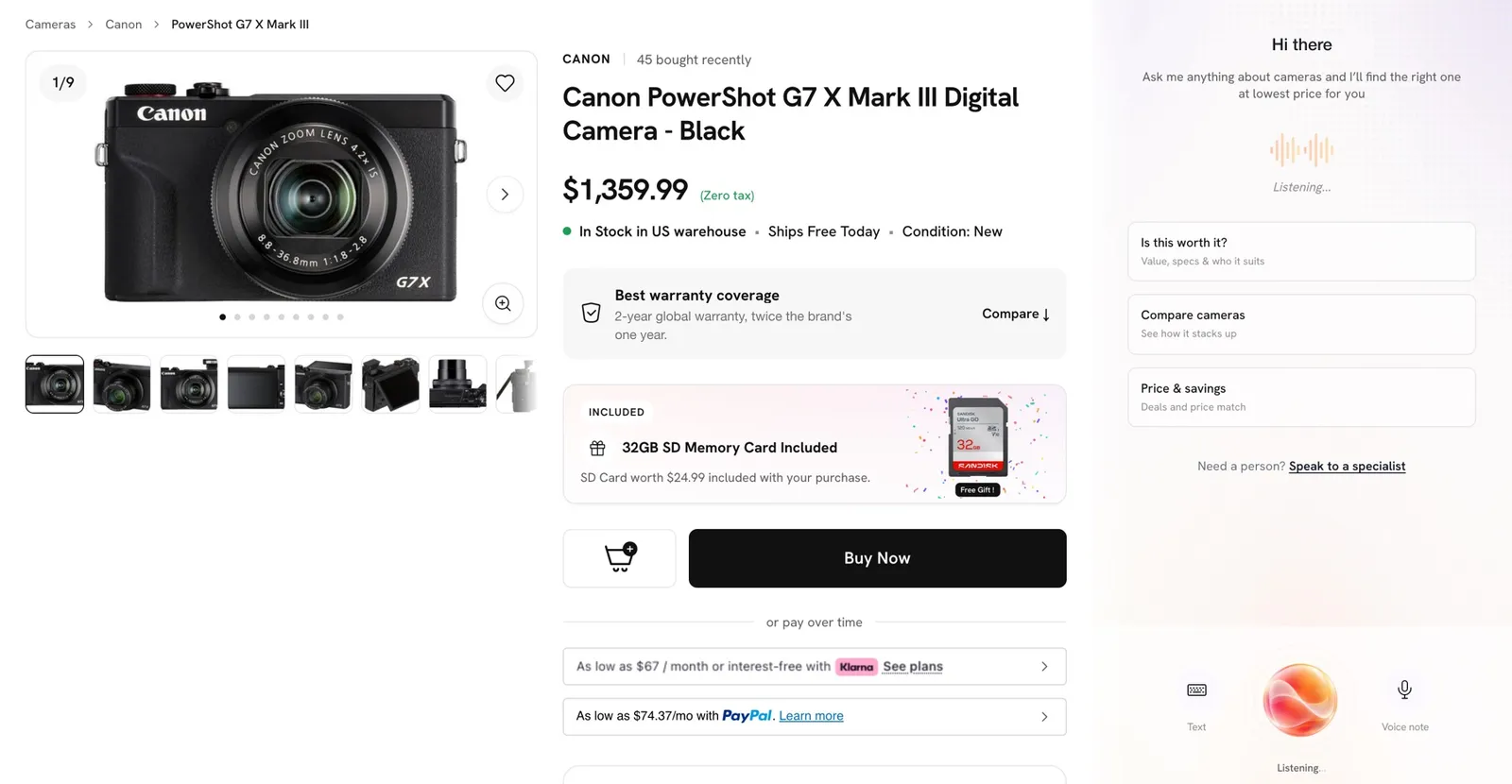
  • The assistant open in a side rail beside a product page, offering three starter questions

    At work

    A shopping assistant that answers from the store's own data

    A voice and text shopping assistant for a US e-commerce store, answering from live product, variant, warranty and shipping data. I rebuilt it end to end to open page sections and switch pages by voice, answer with rich cards and react to ad and browsing context, and added an LLM judge that grades each answer.

    Page actions right in 9 of 10 tests · 12 card types

    prompt test rounds, Sep 2026 · no card shows a price, stock level or date typed by the model

    Case study →
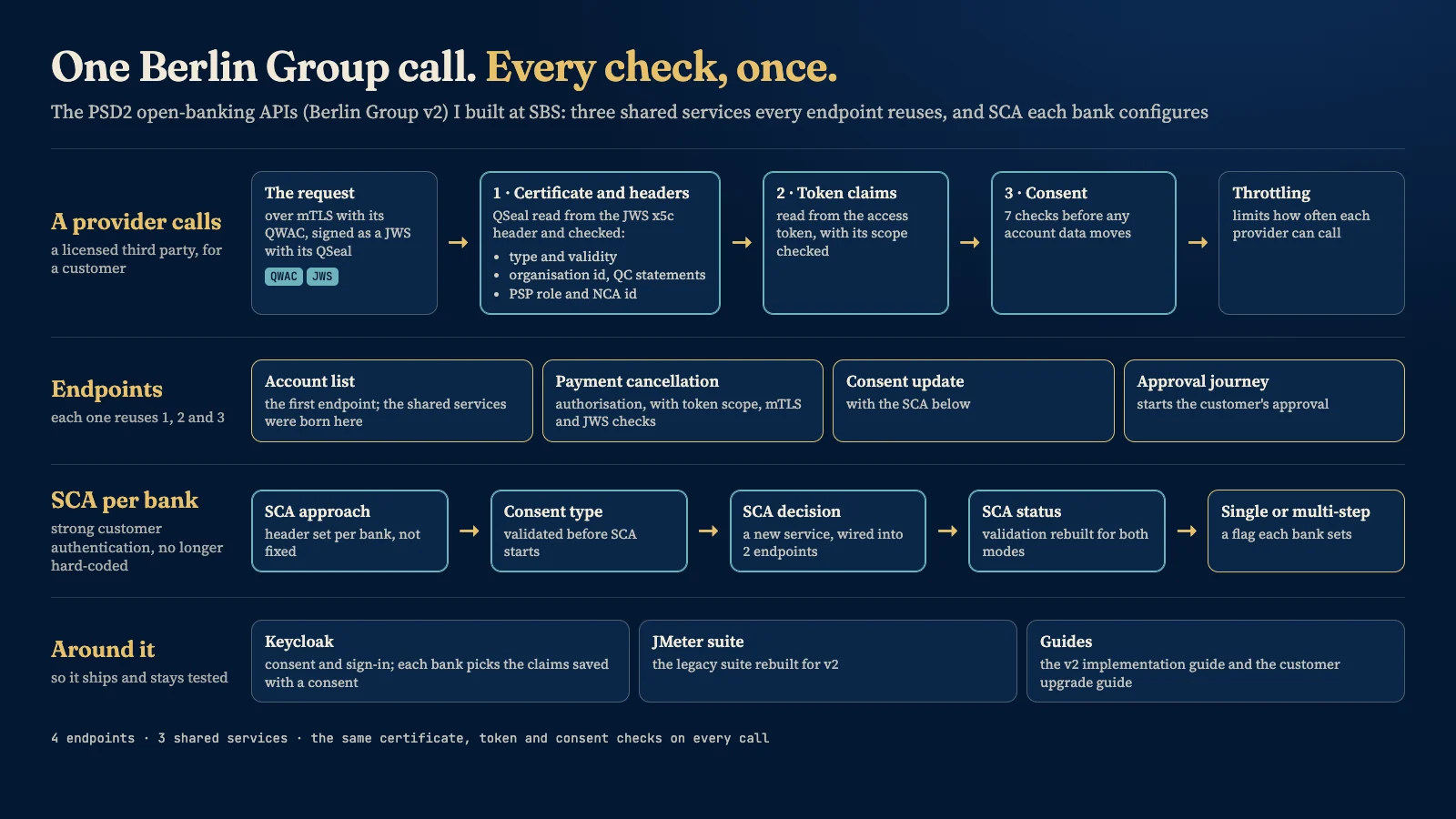
  • One Berlin Group call: a provider's request over mTLS with a QWAC and a QSeal-signed JWS passes the certificate and header checks, token claims and 7 consent checks, then throttling; the account list, payment cancellation, consent update and approval journey endpoints reuse those checks; SCA runs from a per-bank approach header through consent type, an SCA decision service and status validation to a single or multi-step flag; Keycloak, a JMeter suite and the guides sit around it

    At work

    PSD2 open-banking APIs, with SCA each bank configures

    Berlin Group v2 account and payment APIs for European banks at SBS. I built the three shared services every endpoint reuses (certificate and header checks, token claims, consent) and the whole strong customer authentication epic: single or multi-step, per bank.

    4 endpoints on 3 shared services · 6 certificate + 7 consent checks per call

    Berlin Group v2 at SBS, Jan – Jun 2026

    Case study →
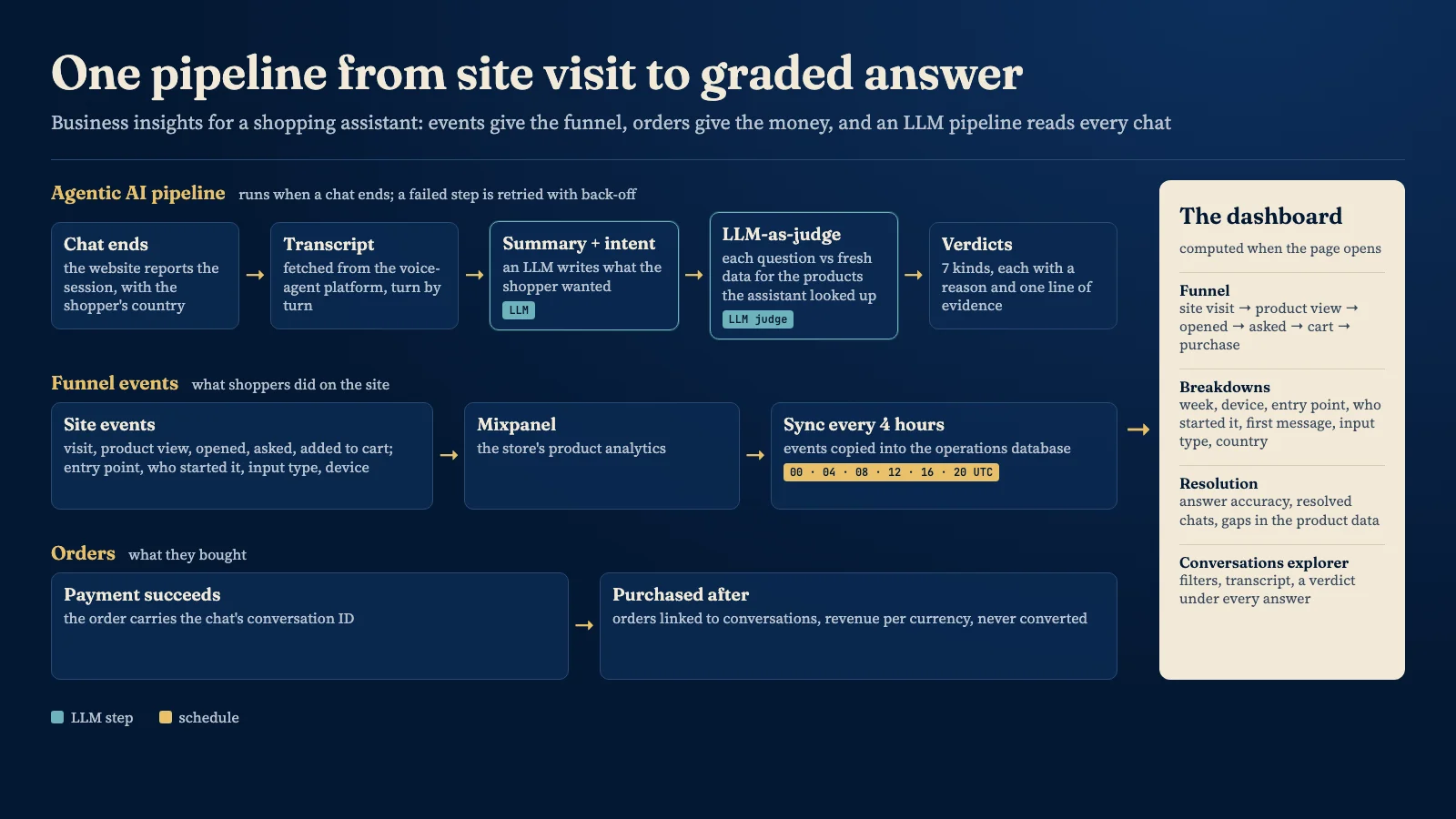
  • Diagram: site events go to Mixpanel and sync every 4 hours; when a chat ends, the transcript is fetched, an LLM writes the summary and intent, and an LLM judge gives each question a verdict; orders carry the conversation ID; all three feed the dashboard's funnel, breakdowns, resolution and conversations explorer

    At work

    Business insights for a shopping assistant, driven by an AI pipeline

    The funnel from site visit to purchase for a US store's voice and text shopping assistant, with breakdowns by device, entry point, input type and country. When a chat ends, an LLM pipeline summarises it and an LLM judge checks every answer against live product data.

    6-step funnel · one of 7 verdicts per question · events synced every 4 h

    tested end to end with the real model, Oct 2026

    Case study →
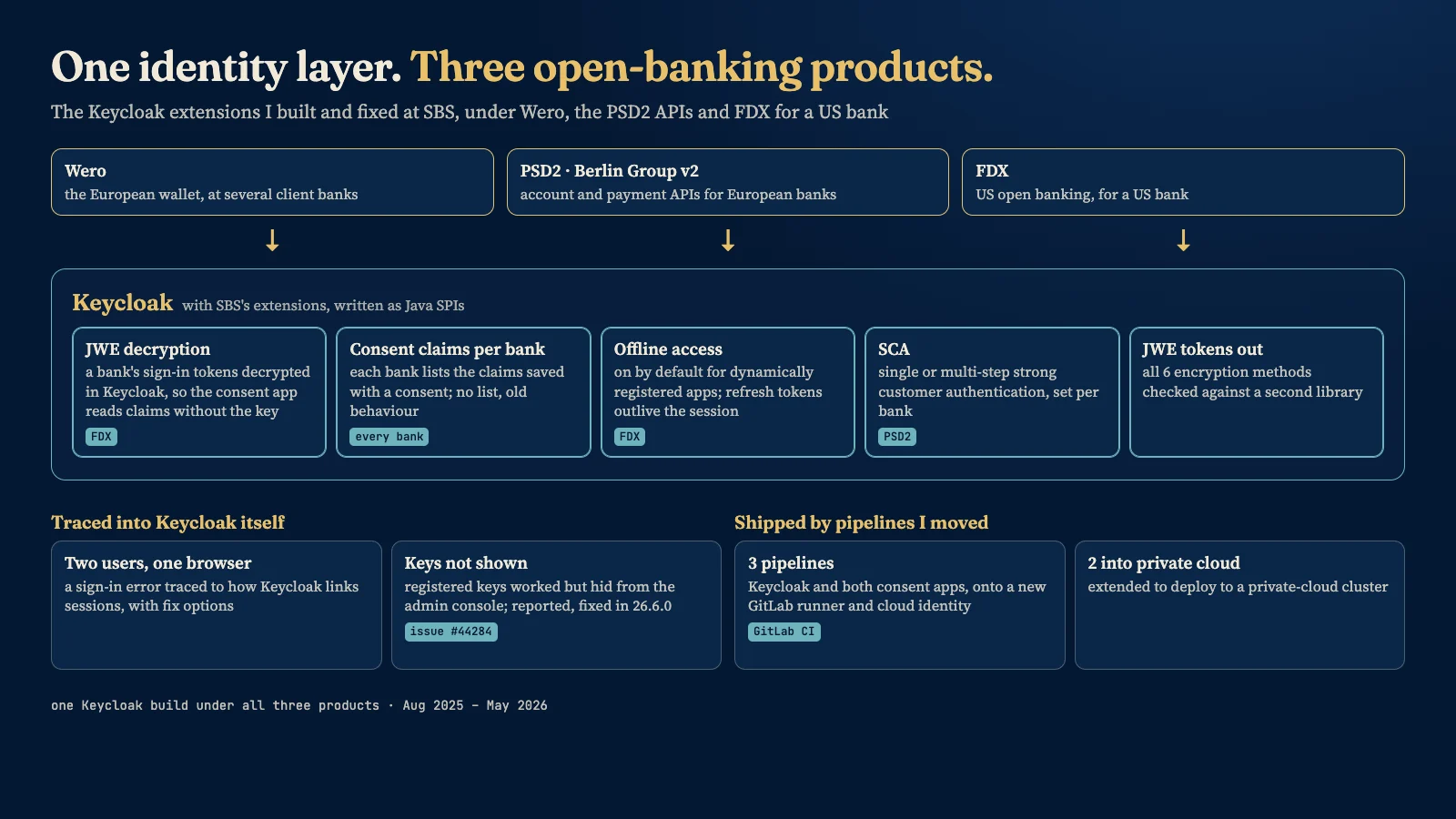
  • One identity layer under Wero, PSD2 Berlin Group v2 and FDX: Keycloak with SBS's extensions for JWE decryption, consent claims per bank, offline access, SCA and JWE tokens out; below, two bugs traced into Keycloak itself, one reported as issue 44284, and the pipelines moved to a new GitLab runner and into private cloud

    At work

    FDX for a US bank, and the Keycloak layer under all three

    Wero, the PSD2 APIs and FDX all sign customers in and record consent through Keycloak. I built its extensions at SBS: decrypting a bank's JWE tokens, consent claims each bank chooses, offline access for registered apps and SCA, plus the pipelines that ship them.

    3 of 3 products on one Keycloak build · a bug reported upstream, fixed in 26.6.0

    SBS, Aug 2025 – May 2026 · Keycloak issue #44284

    Case study →
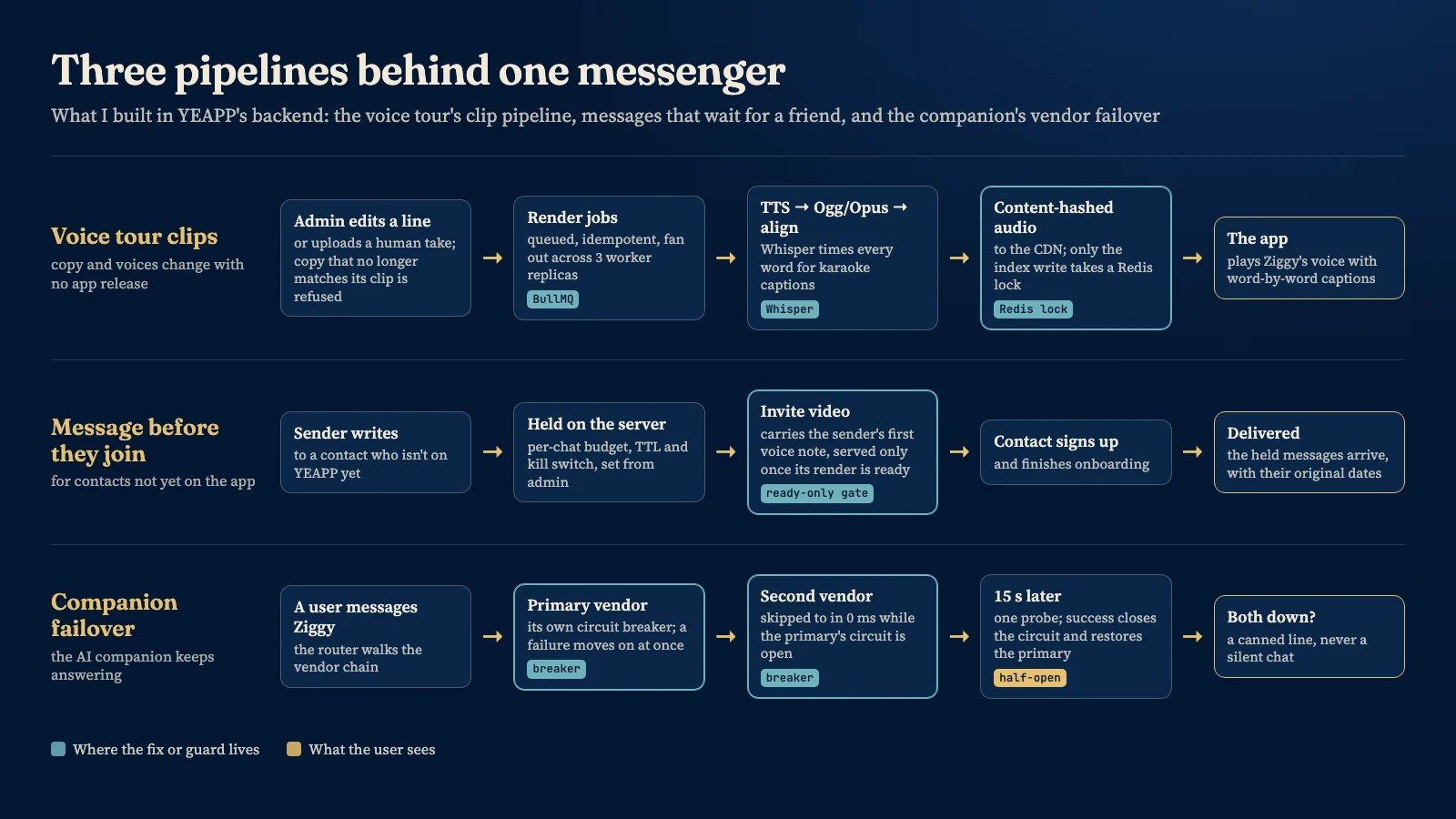
  • YEAPP's three pipelines: the voice tour clips, held messages and the companion's vendor failover

    At work

    YEAPP: a voice-first messenger for KRAFTON India

    I built, end to end, the AI companion's vendor failover with circuit breakers, the voice-onboarding pipeline, and pre-join messages: write to a contact who isn't on the app yet, delivered when they sign up.

    Failover on the first error · 58 clips word-aligned · 0 lost writes across 3 replicas

    live failure and replica tests, Aug – Sep 2026

    Case study →
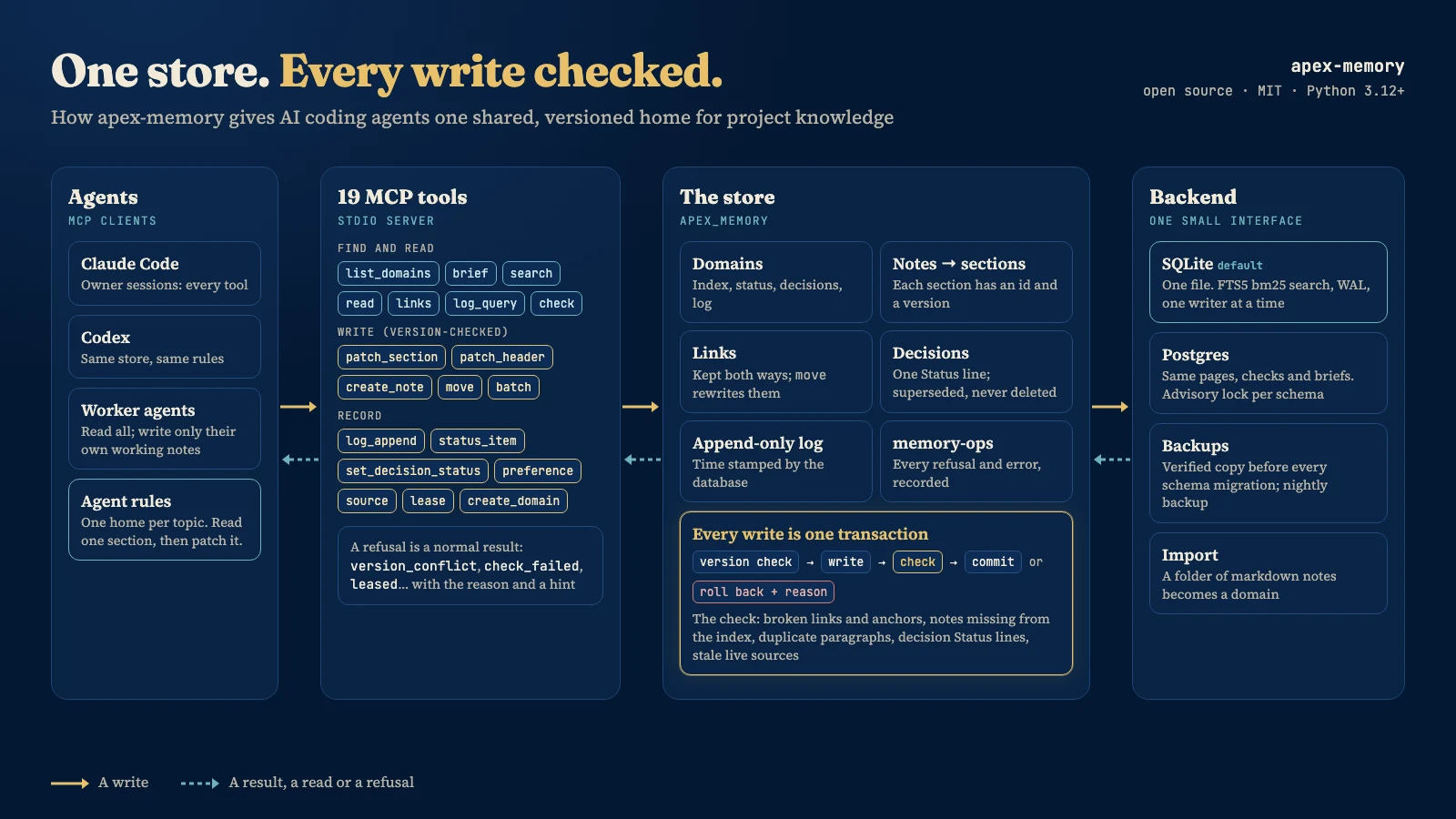
  • apex-memory architecture: Claude Code, Codex and worker agents call 19 MCP tools; the store checks each write in one transaction; SQLite or Postgres holds the data

    Side projects

    apex-memory: one checked memory for every coding agent

    An open-source MCP memory store that Claude Code and Codex share. Every write is version-checked and rolls back if it breaks a link or the index.

    49 vs 141 tool calls · 14/14 vs 13/14 correct

    same 7 tasks, store vs Obsidian, 12 Oct 2026

    Case study →Read the code ↗
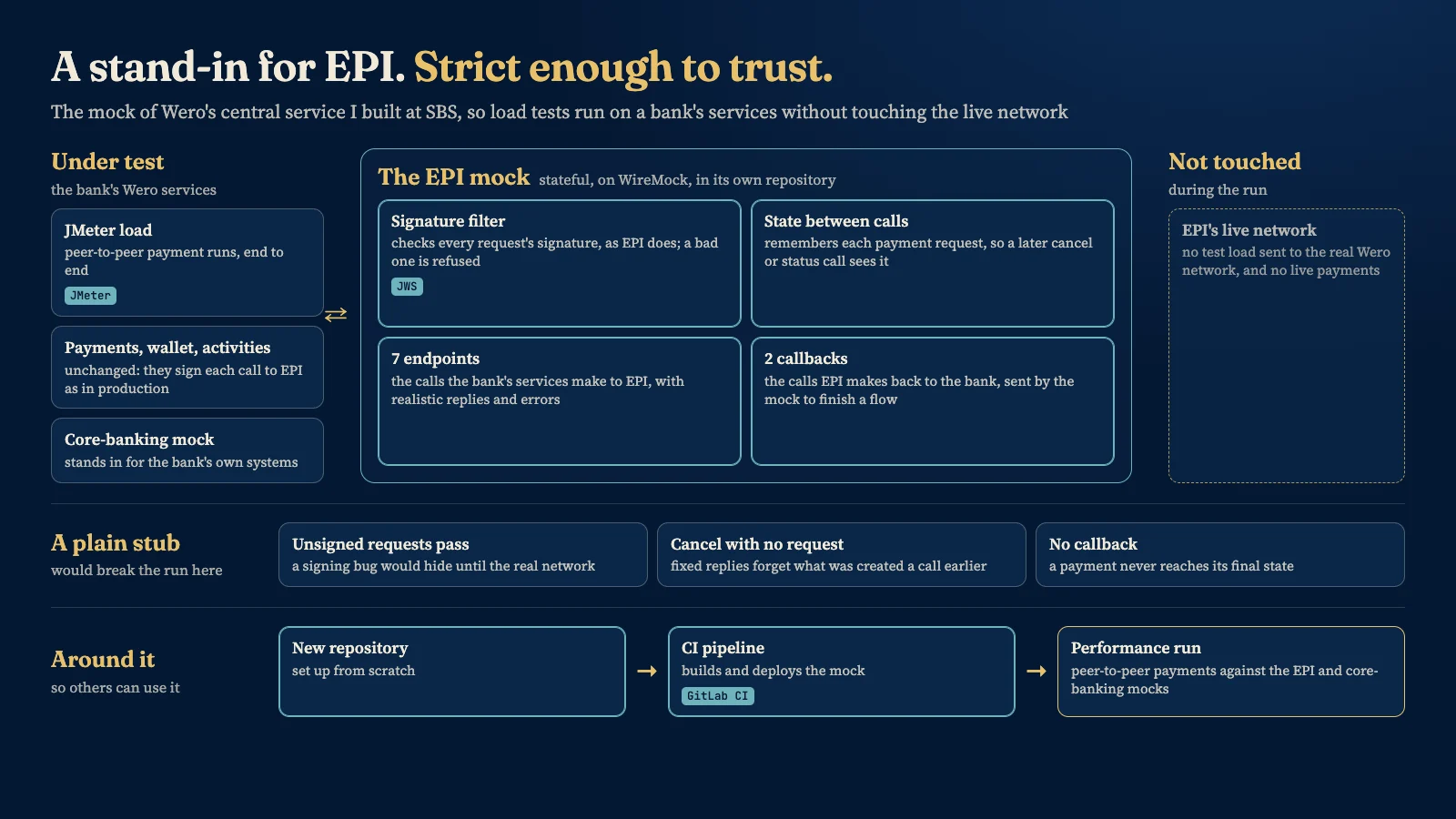
  • The EPI mock: JMeter drives the bank's Wero services and a core-banking mock against a mock that checks request signatures, keeps state between calls, serves 7 endpoints and sends 2 callbacks, while EPI's live network is not touched; below, what a plain stub would miss, and the new repository, CI pipeline and performance run

    At work

    An EPI mock that behaves like EPI

    A stand-in for Wero's central service, so a bank's services can be load-tested without the live network. It checks request signatures, keeps state between calls and sends EPI's callbacks, from a repository and CI pipeline I set up.

    9 endpoints: 7 calls + 2 callbacks · 0 calls to the live network

    peer-to-peer performance run, Mar 2026

    Case study →
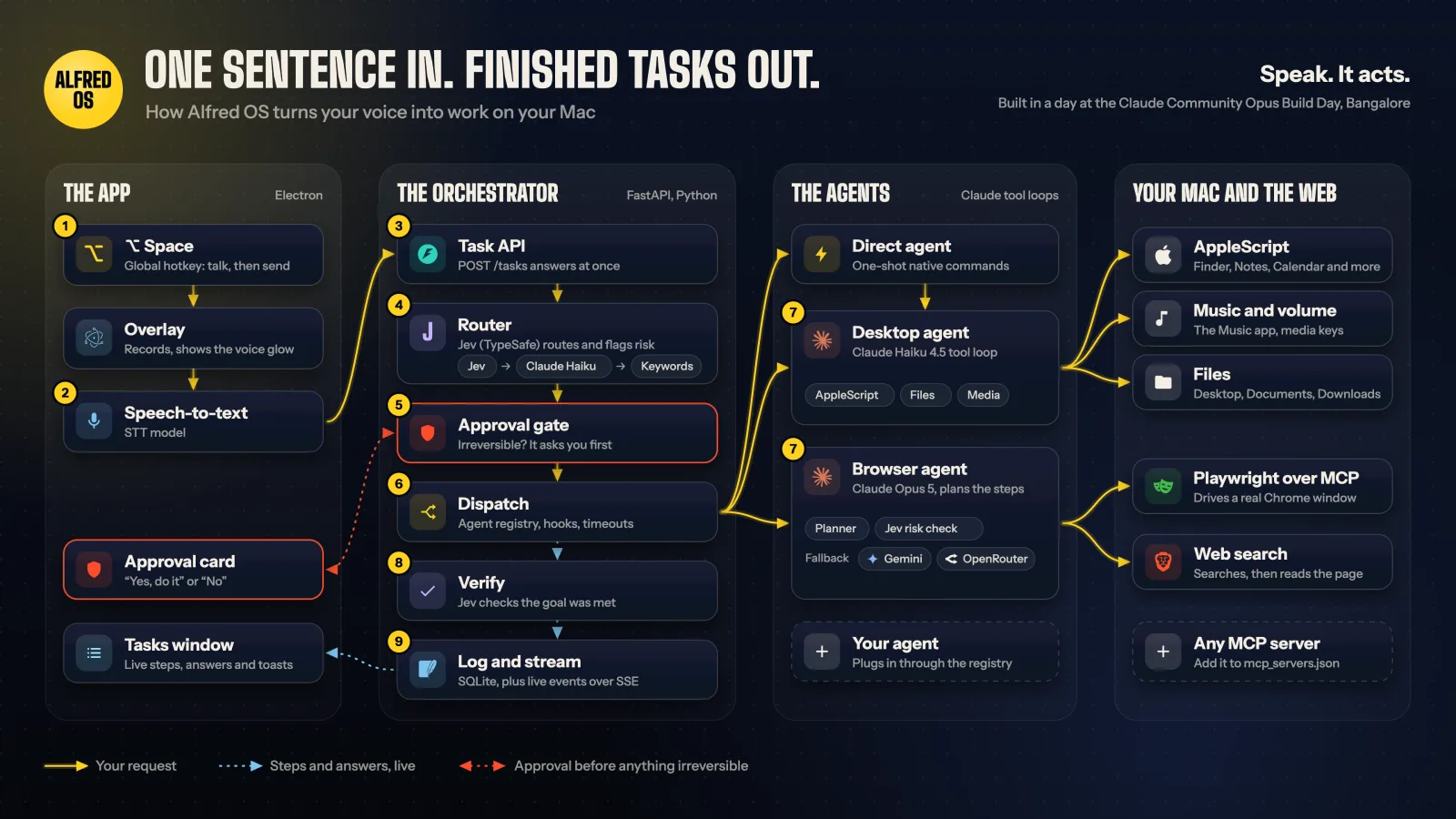
  • Alfred-OS architecture: the app, the orchestrator, the agents, and the Mac and the web

    Side projects

    Alfred-OS: a voice-driven macOS agent, built in a day

    Built with two teammates at the Claude Community Opus Build Day, Bangalore. I built the hold-to-talk voice input, background tasks with live progress and spoken confirmations.

    Simple commands done in 3–5 s

    on the demo Mac · 2 merged PRs, Sep 2026

    Case study →Read the pull requests ↗Watch the demo on LinkedIn ↗
  • At work

    A storefront memory leak, found and fixed

    Traced slow product pages to a server memory leak that crashed the site four times in a week.

    Product-page first-byte p95 1.8 s → ~1.3 s

    real visitors, 1 week before vs 3 days after

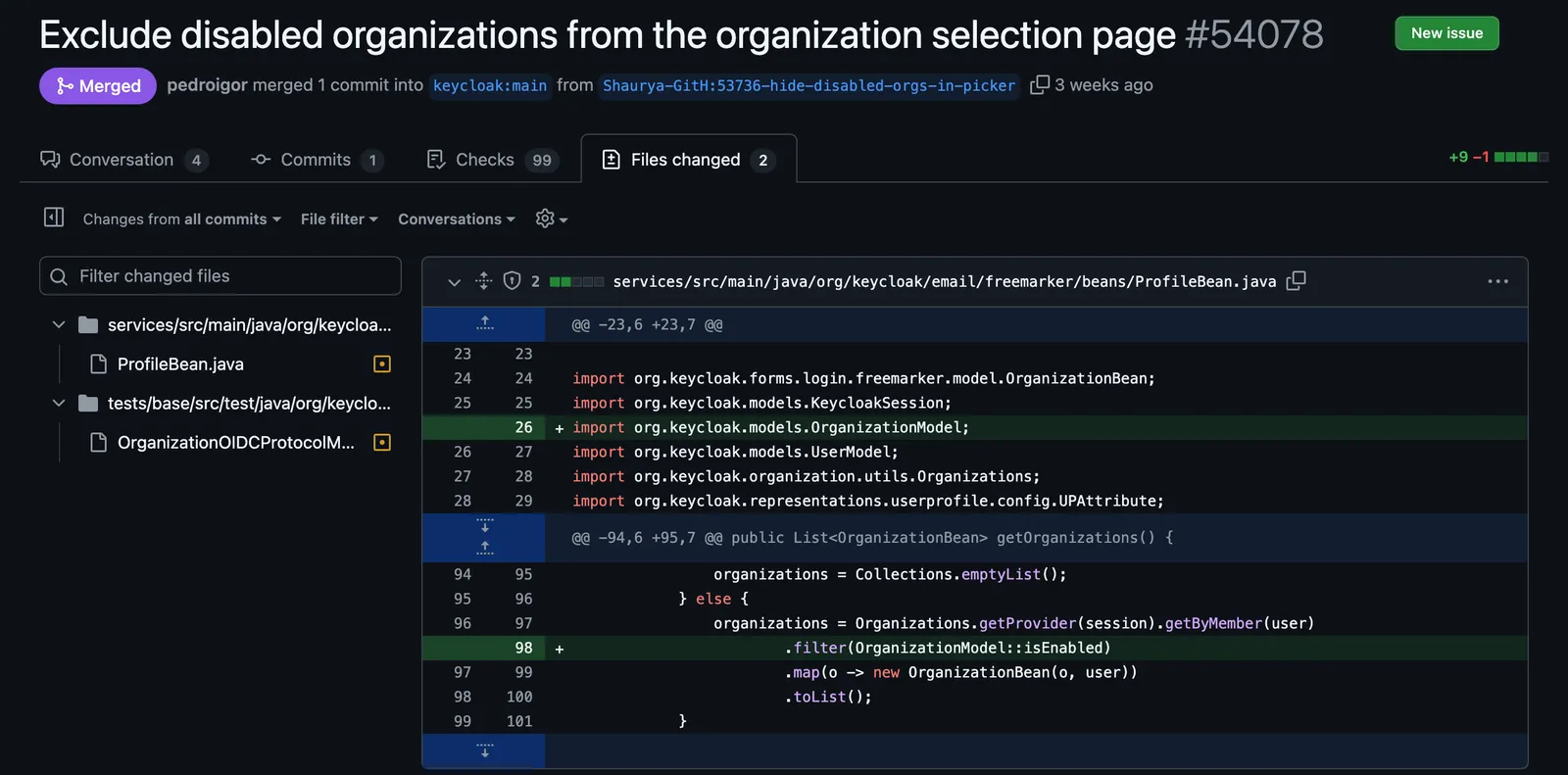
  • Keycloak pull request 54078, merged: the diff adds a filter that keeps only enabled organizations

    Open source

    Keycloak: login stops offering disabled organizations

    Choosing a disabled organization reloaded the page with no message. They're filtered out now, with a test that fails without the fix. I also reported a Dynamic Client Registration bug that the Keycloak team fixed in 26.6.0.

    PR #54078 · merged Oct 2026

    +9 / −1 lines · also issue #44284, fixed in 26.6.0

    Read the pull request ↗
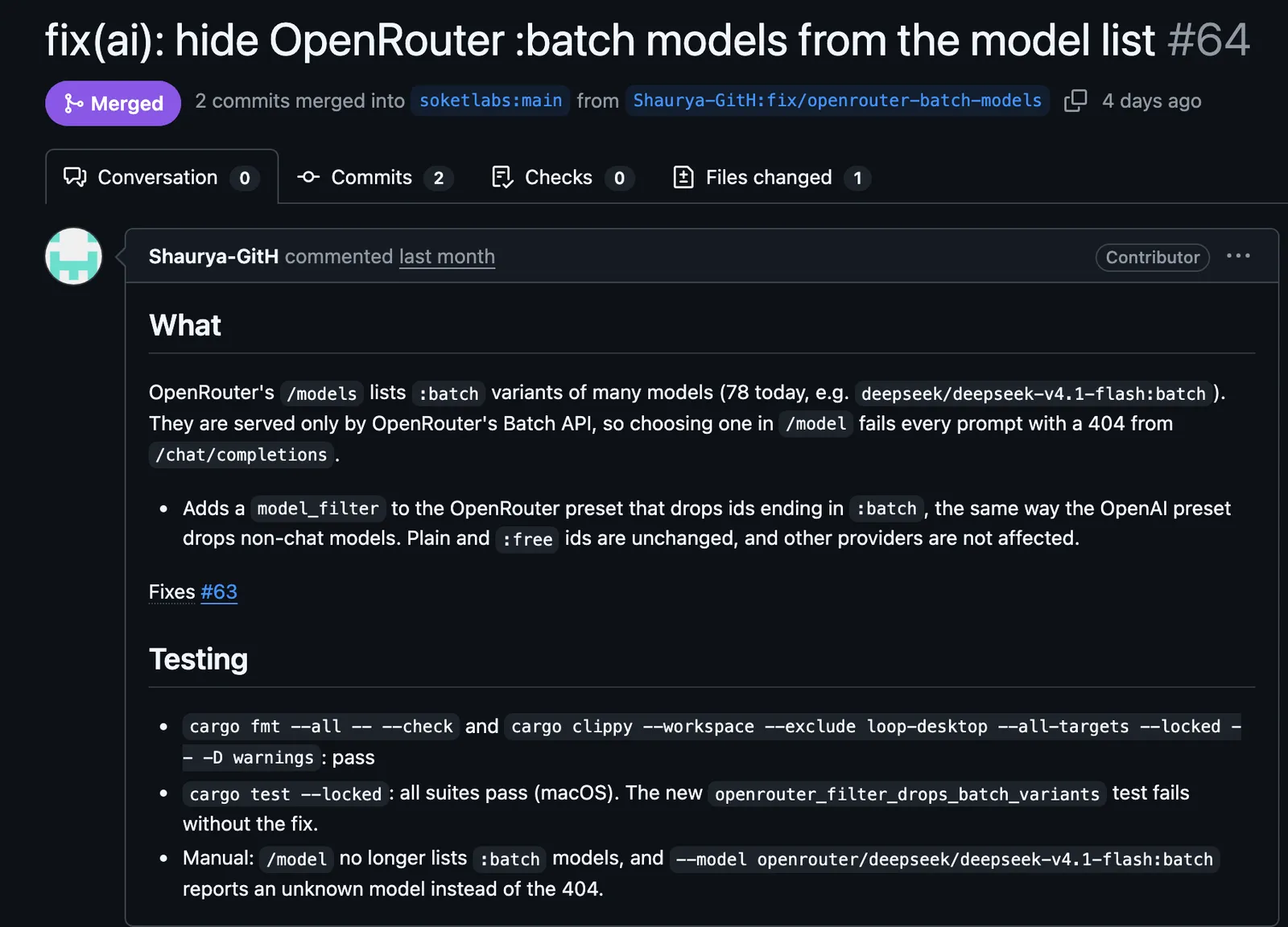
  • Loop pull request 64, merged: its description of why OpenRouter batch-only models failed and how the preset now hides them

    Open source

    Loop: batch-only models no longer 404

    78 OpenRouter :batch models failed every prompt at the time. The provider preset now hides them, with a test.

    PR #64 · merged Nov 2026

    Rust agent harness · closes issue #63

    Read the pull request ↗
  • Side projects

    Emotion recognition from face, voice and text

    Fuses three models (a CNN on FER-2013, a CNN-LSTM on RAVDESS and BERT on GoEmotions) behind a chatbot.

    85% cumulative accuracy

    under 300 ms average response

    Read the code ↗
  • At work

    An order engine built from sagas

    Exchanges, partial cancellations, inventory sync and fulfilment as MedusaJS workflows with compensating steps, idempotency and retries, at a pre-seed marketplace where I owned the platform end to end.

    Saga-based order lifecycle · event-driven

    For Real · Jun – Jul 2026

  • Side projects

    WeSplit: settle a group with 70% fewer payments

    A Splitwise-style expense app in Spring Boot and React. Fixing N+1 queries and adding Redis cut API response times 60% and database reads 90%.

    70% fewer settlement transactions

    debt-settlement algorithm · Keycloak auth

    Read the code ↗

Building something with AI agents?

Email me

Designed and built by Shaurya Mehta

  • GitHub
  • LinkedIn
  • X
  • LeetCode
Not written yet